
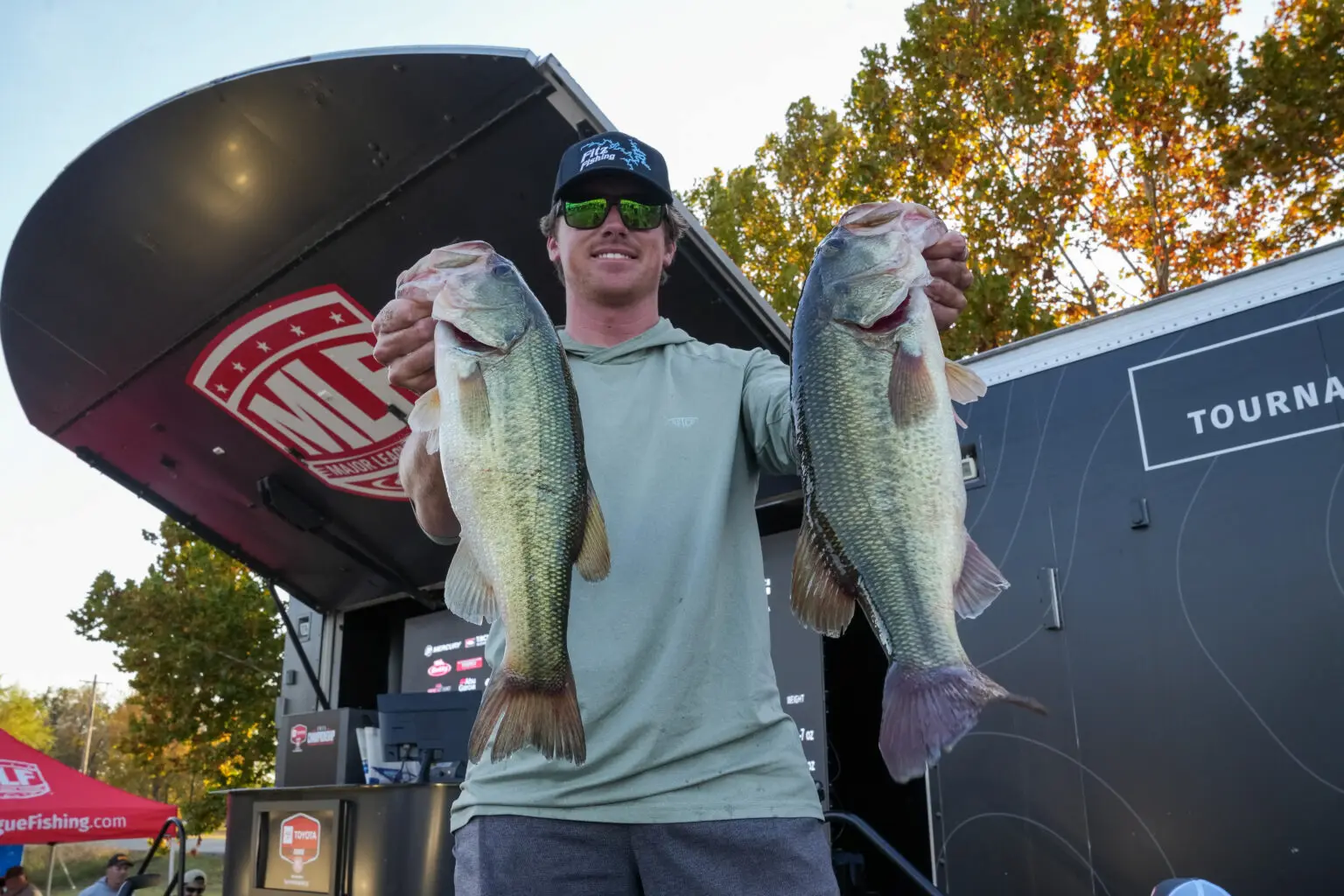
This past week, I had the opportunity to fish one of the most prestigious tournaments in professional bass fishing, the 2025 Toyota Series Championship. This year’s championship took place on Grand Lake in Grove, Oklahoma, a well-known fishery that’s hosted some of the biggest bass tournaments in the country.
Fortunately, I’ve competed on Grand Lake several times before, so I came in with some solid background knowledge. The lake also shares a lot of similarities with Lake of the Ozarks, where I fish regularly, so it felt a bit like home water.
Practice and Preparation
Practice went well overall. I found a dependable fall pattern that fit my style perfectly, skipping a jig under boat docks and fishing deep brush piles. The bites were limited, but the fish I caught were the kind you want in a tournament, solid, quality bass.
On Day One, everything went according to plan. My first stop of the morning produced my biggest fish of the day, a healthy four-pounder, along with several other good keepers. I kept upgrading throughout the day and ended up with a 14-pound bag, which had me sitting comfortably in 13th place after the first day.
Day Two: The Adjustment That Paid Off
I went into Day Two feeling confident, but the morning didn’t go as planned. By noon, I had only three keepers and realized I needed to make a major adjustment. My jig bite had completely shut down, so I decided to make a long run to a different section of the lake, a gamble that ended up paying off in a big way.
The first spot I stopped at had a large school of bass feeding on bait, and things turned around quickly. I caught several quality fish there, including my biggest bass of the entire tournament, a five-pounder. That flurry brought my total up to 15 pounds for the day, which jumped me all the way into first place going into the final day.
Final Day: Lessons Learned
I wish I could say the final day went perfectly, but that’s not always how things go in tournament bass fishing. I started on the same school that produced the day before, but after catching just one keeper, I knew it was time to make another adjustment.
I ran multiple patterns and covered water from shallow to deep, but nothing seemed to click. At noon, I had only two fish in the livewell. I decided to return to my starting area and eventually found a small flurry of bites. Using a small swimbait, I managed to fill out a limit by targeting fish that were schooled up in about 20 feet of water.
Hoping for one last big bite to seal the deal, I spent the rest of the day junk fishing hitting various spots and mixing in different techniques. I caught several more keepers, but nothing that would upgrade my bag. I finished the day with nine pounds, dropping to 9th place overall at weigh-in.
Not the finish I was hoping for, but I’m proud of the effort and the way I adjusted against some of the best anglers in the world.
Takeaways for Future Tournaments
Looking back, there are several lessons from Grand Lake that I’ll carry into future events, especially on Lake of the Ozarks.
The biggest takeaway is the importance of keeping an open mind. In tournament fishing, conditions can change fast, and sticking to one pattern too long can cost you. My Day Two adjustment saved my tournament. Without that move, I likely would’ve fallen outside the check line.
Another key lesson is to develop confidence in multiple patterns during practice. Even when things go well, you need to have backup options ready. Versatility is one of the most valuable traits a tournament angler can have, and it often makes the difference between a good finish and a great one.
Check out these articles with more info:


